
Restoring a Salt-Corroded Aircon in a Batu Ferringhi Seafront Condo
A seafront Batu Ferringhi condo unit was barely cooling and smelled musty after years of coastal salt air. Here's the chemical overhaul result, before and after.
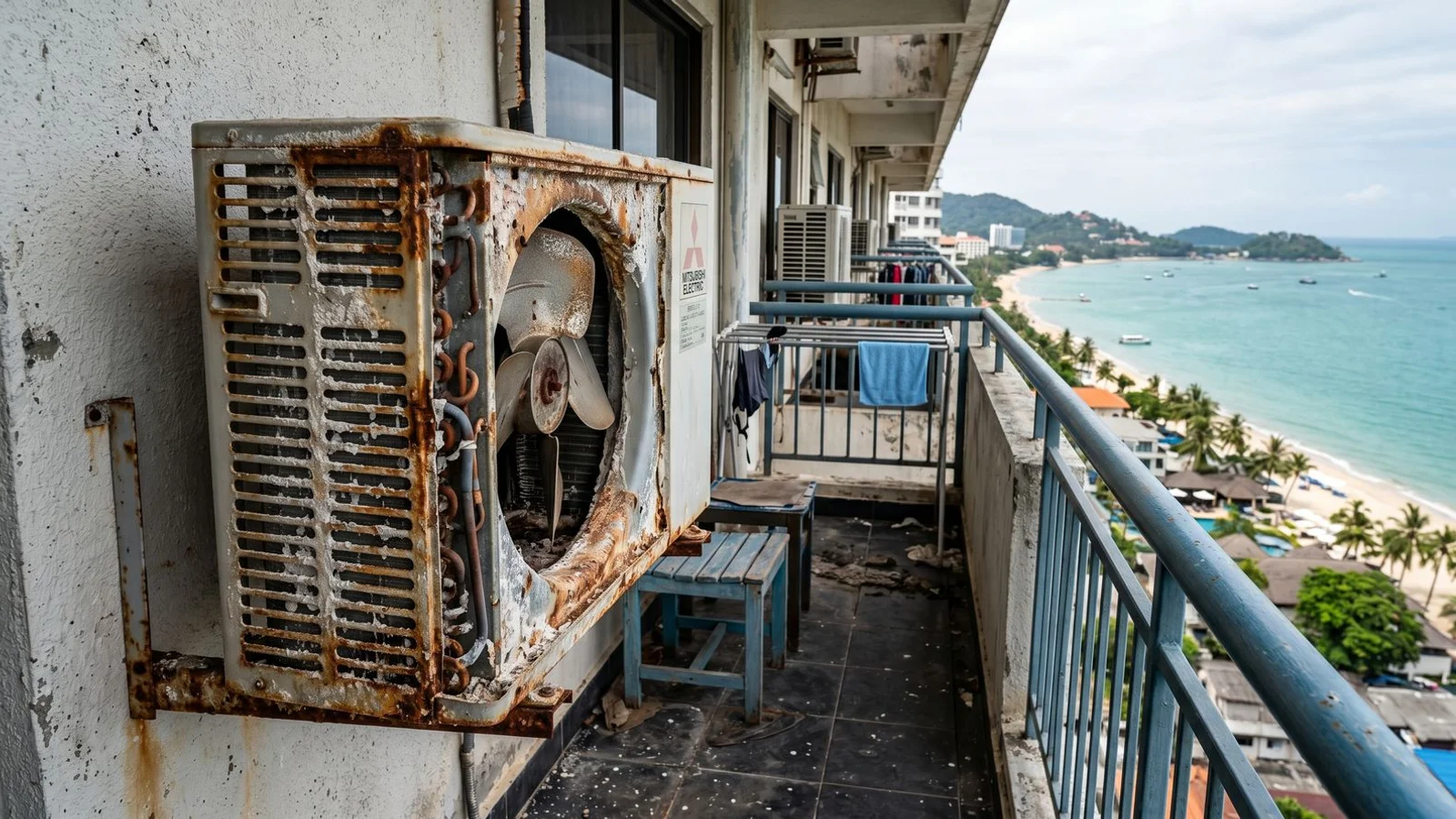
A customer in a beachfront condo at Batu Ferringhi WhatsApped us last month: “My aircon is barely cooling, smells musty, and the bill is RM200/month higher than it used to be. Is it dying?”
The unit was a 1.5 HP Daikin inverter, 6 years old, never chemically washed. In a seafront unit. That combination is what we call “the Penang coastal trifecta” — humidity, salt air, and neglect. It’s the kind of job our aircon service in Penang team sees most often along the coast.
Here’s how we restored it.
The site visit
When we arrived at the condo, the unit looked okay from across the room. Up close, it was a different story:
- Front grille: visible black streaks from biological growth.
- Filter: caked in dust — last cleaned 8+ months ago by the customer’s own admission.
- Outdoor condenser: fins discoloured, some salt-corrosion pitting on the aluminum.
- Cooling test: room temperature 28°C, vent temperature 21°C. Only 7°C drop across the coil — a healthy unit should be 9–12°C.
- Musty smell: strong on switch-on, dissipating after 5 minutes.
This was a unit that had been overdue for service by at least 18 months. Combined with the coastal exposure, a standard aircon chemical wash wasn’t going to be enough. We recommended a chemical overhaul.
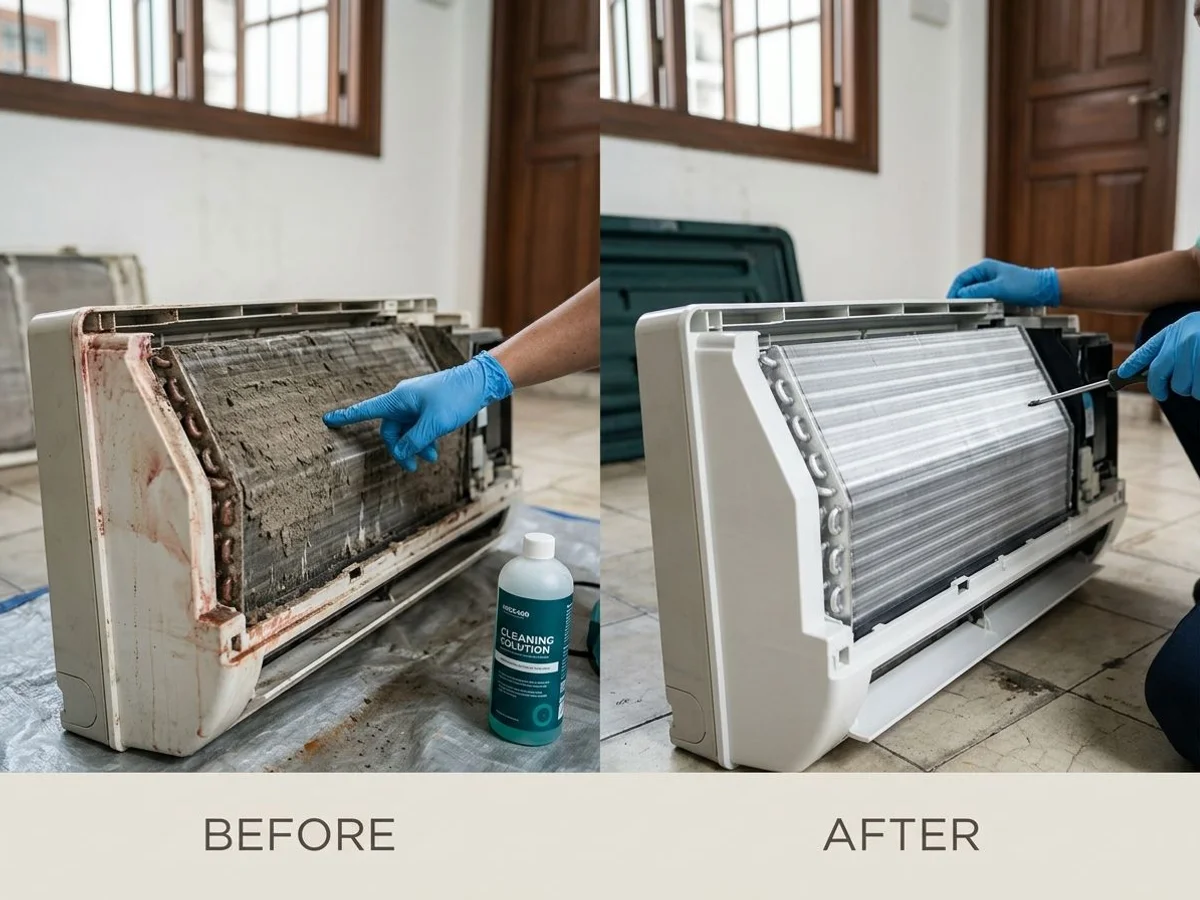
What we found during the overhaul
After dismantling the indoor unit:
- Evaporator coil: completely blackened with bonded biological growth. The fins were sticking together where the grime had bridged them.
- Blower wheel: thick crust of mould and dust. The wheel was running unbalanced because the buildup wasn’t even.
- Water tray: ¾ filled with stagnant water that wasn’t draining. Algae thick on the surface.
- Drain line: completely blocked with what looked like a 4-inch plug of biofilm and debris.
The blocked drain explains why water was occasionally dripping into the room — the customer had assumed a “warm air problem” but it was also a leak waiting to happen.
The overhaul process
A standard chemical wash takes 60–90 minutes per unit. This one took 3 hours because we needed to:
- Fully disassemble the indoor unit — every plastic cover removed.
- Triple-soak the coil with chemical cleaner because the grime was bonded.
- Hand-clean the water tray to remove algae from every surface.
- High-pressure flush the drain line twice — the first pass cleared the main blockage; the second cleared residual debris.
- Removed and chemically cleaned the blower wheel separately.
- Outdoor unit deep clean — pressure wash of the condenser fins, careful work around the corroded sections.
- Reassemble and test.
The corrosion damage to the outdoor fins wasn’t going to be fully reversed by cleaning — that’s structural. But we cleared the buildup that was insulating them and restoring most of the heat transfer they could still do.
The result
After reassembly and running cooling for 20 minutes:
- Vent temperature: dropped to 14°C with room at 28°C. 14°C across the coil — full design spec.
- Airflow: noticeably stronger. The blower was running balanced and clear.
- Smell: gone. Completely.
- Drainage: flowing freely.
The customer felt the difference immediately. The room cooled to comfortable in 15 minutes instead of the 45 it had been taking.
What this case teaches
Three things worth noting for any seafront aircon owner in Penang:
1. Coastal cadence is not optional
Inland Penang homes can stretch chemical washes to 12 months. Seafront homes — Batu Ferringhi, Tanjung Bungah, the NE corridor — cannot. We recommend 4–6 months for any unit within 1 km of the sea.
This customer is now on a 6-month cycle. We’ve put them on our reminder list.
2. The TNB bill was a leading indicator
The customer mentioned the RM200/month bill increase. We confirmed afterwards: the dirty coil was making the compressor work much harder, and the inverter board was responding by feeding the compressor more current to maintain cooling. After the overhaul, the next billing cycle showed RM180 less than the previous month. Over a year, that’s RM2,000+ in TNB savings — the overhaul paid for itself nearly 7 times over.
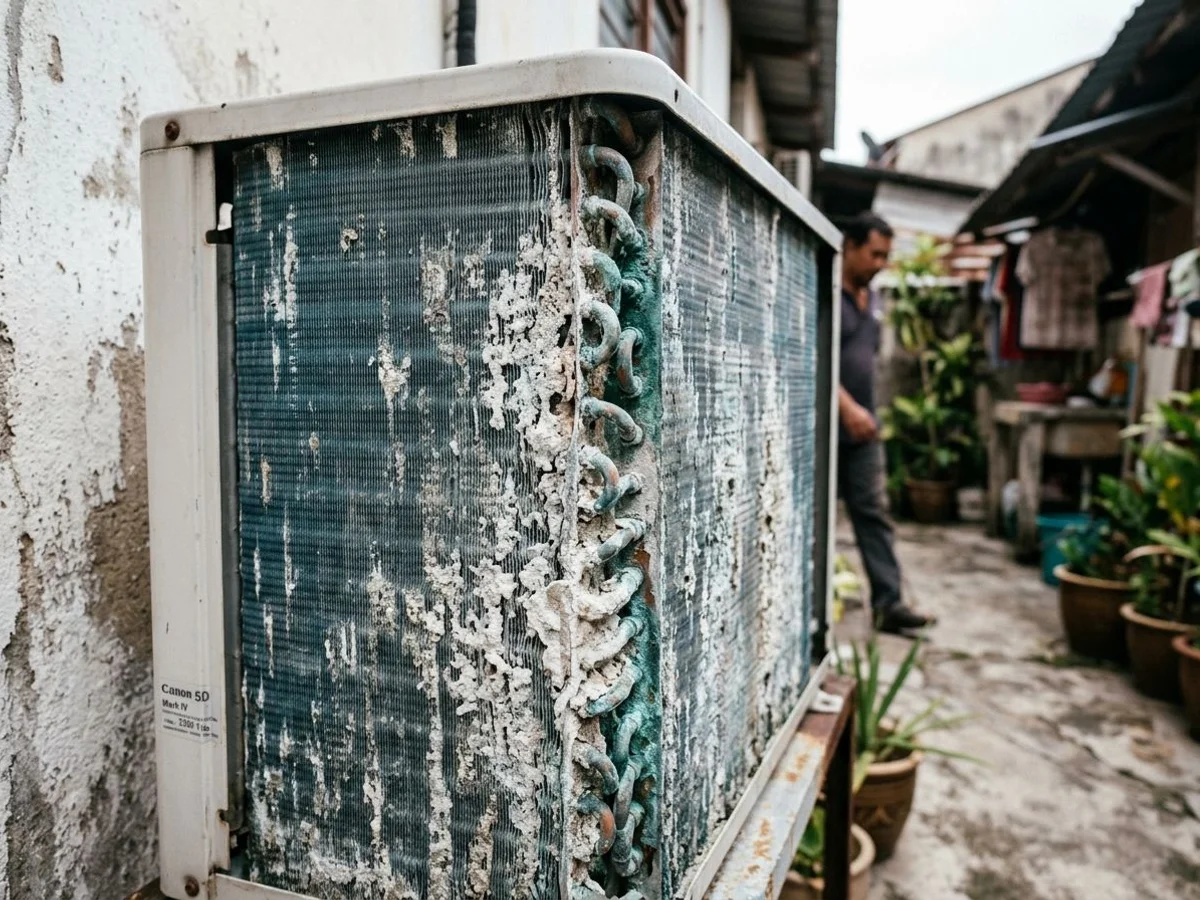
3. Corrosion on the outdoor unit is forever
The pitting damage on the condenser fins can’t be cleaned away. It’s metallic loss from salt corrosion, and once it’s there, it’s permanent. The unit will still work, but its heat-transfer surface is reduced.
For seafront units, we now recommend Daikin or Panasonic models with anti-corrosion coil coatings (Blue Fin, Blue Coil) on new installs. They cost a little more upfront and last significantly longer in coastal exposure.
The takeaway
If you’re in a seafront condo, your aircon is on a tighter clock than inland units. Get on a 4–6 month chemical wash schedule, replace neglected units with corrosion-coated coil models, and budget for the maintenance — because the alternative is a unit that dies in 5 years instead of 10.
If you’ve been ignoring a salty, neglected unit, WhatsApp us. We can usually restore most of the cooling — but the longer you wait, the harder it gets.