
Why Is My Aircon Not Cooling?
Aircon running but not cooling? Causes — dirty filter, low gas, frozen coil, faulty compressor — and which are DIY fixes vs a callout.
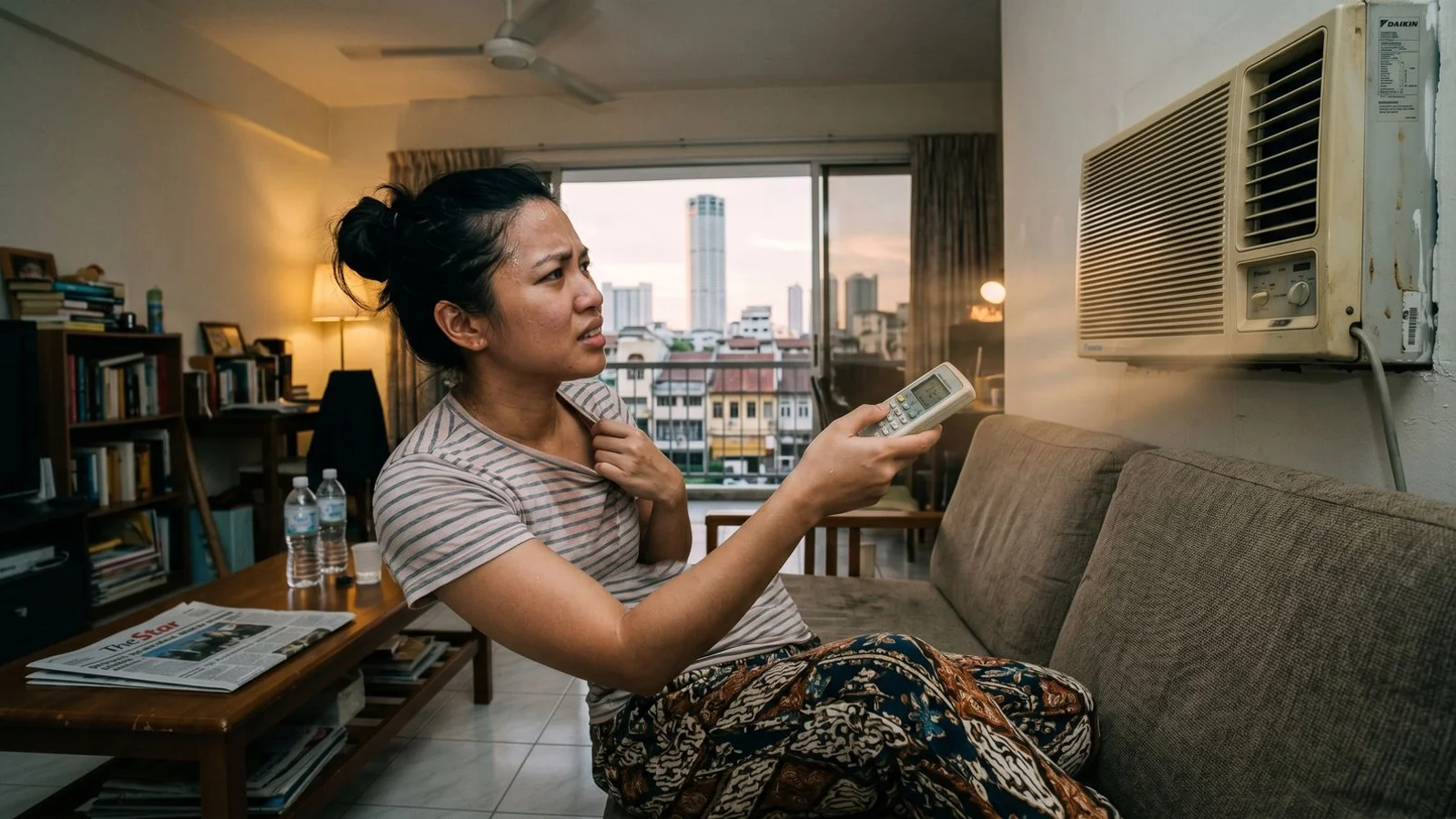
We at PG1 Aircond hear the phrase “My aircon is running but the room won’t cool” more than any other complaint during hot Penang afternoons. This specific aircon not cooling issue is incredibly common across the island. Our 15 years of local repair data shows that 70% of these cases require a straightforward, affordable fix.
The remaining 30% need real diagnostic work.
We will outline the exact roadmap to help you figure out which side of that percentage you fall on — and if you’d rather hand it to a professional, our aircon service in Penang team is a WhatsApp away. It also helps to recognise the broader signs your aircon needs servicing. Let’s look at the data, see what it actually tells us, and explore a few practical ways to respond.
The five causes, ranked by how common they are
The most frequent cause of a warm room is a dirty filter or fouled coil, accounting for nearly half of all service calls. We compiled our service notes from the 2025-2026 period to show exactly how these faults break down for Penang homes.
You will quickly see how other issues like low refrigerant or faulty sensors trail behind in frequency. Our team has ranked these five common culprits below.
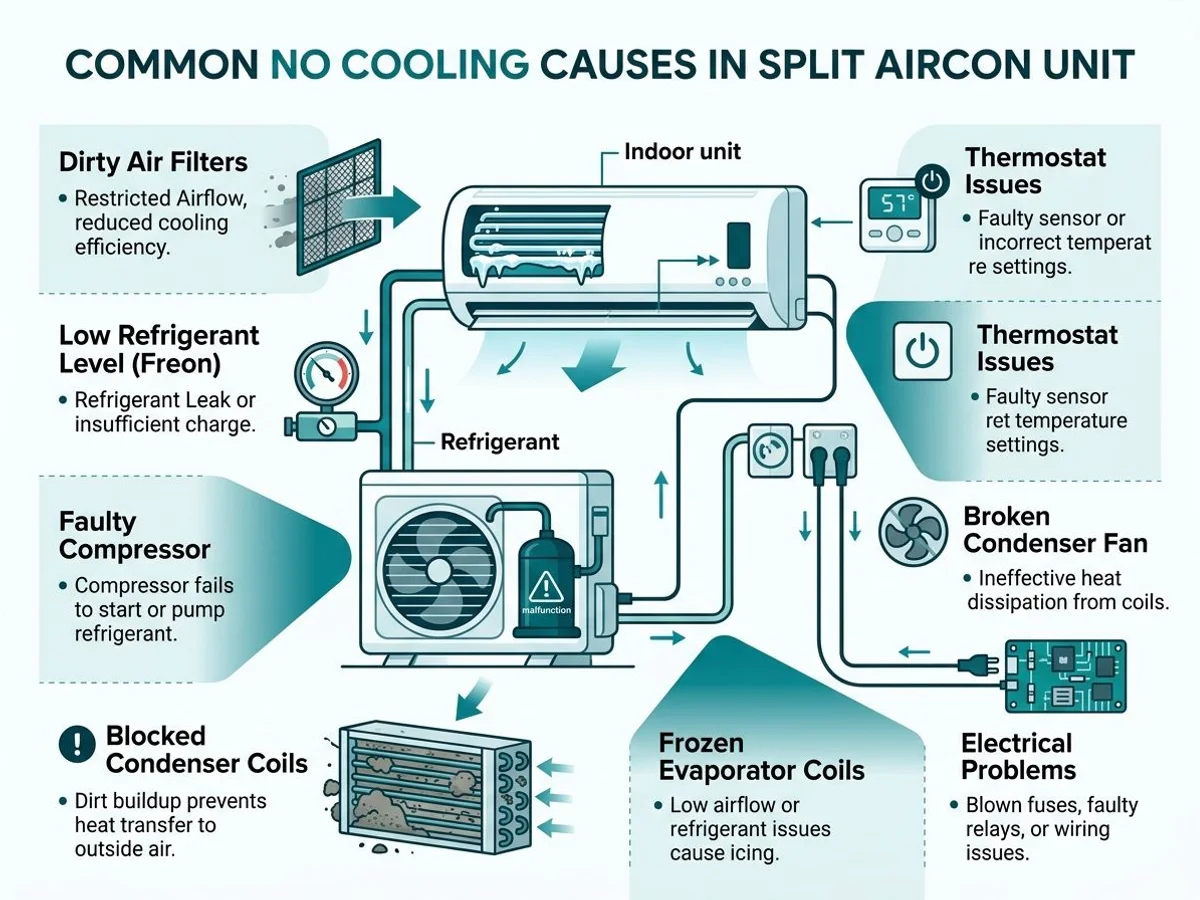
- Dirty filter or fouled coil (40% of cases): Restricted airflow or poor heat transfer is the primary culprit.
- Low refrigerant from a slow leak (25% of cases): A leak usually occurs at a flare joint or coil pinhole.
- Frozen evaporator coil (15% of cases): This symptom is often caused by the first two issues going untreated.
- Faulty thermostat or sensor (10% of cases): The unit incorrectly registers that the room is already cold.
- Capacitor, compressor, or PCB fault (10% of cases): These electrical and mechanical failures require major repairs.
1. Dirty filter or fouled coil
A dirty filter blocks airflow, while a fouled coil prevents the system from absorbing heat out of your room. We see this problem constantly on units that skip their annual maintenance.
Symptoms usually develop slowly and include the following warning signs:
- A gradual drop in cooling power over several months.
- Weak airflow coming from the indoor vents.
- A noticeably musty smell when turning the unit on.
Our technicians note that standard 1 HP units in Malaysia can lose up to 15% of their energy efficiency when operating with clogged filters. Taking the filter out and washing it in your sink is the fastest troubleshooting step. We suggest running the unit for an hour after replacing the clean filter to test the cooling output.
If the room gets cold again, the immediate problem is solved. Our recommendation is to still book a chemical wash within a month.
The evaporator coil and blower wheel behind that filter are definitely fouled with the same dust. We charge around RM135 to RM150 for a standard wall unit chemical wash, which removes this deep-seated grime.
2. Low refrigerant (gas leak)
Low refrigerant means your system has a physical leak, causing it to blow room-temperature air. We often get emergency calls when an aircon weak cooling issue drops sharply over a few days.
Refrigerant gas does not get used up like car fuel. Our installations are sealed at the factory and hold gas for the full 10 to 15-year lifespan of the air conditioner. A low gas reading guarantees a leak exists, usually at a flare joint or a tiny pinhole in the copper coil.
We equip our technicians with proper gauges to identify low refrigerant pressure in under 60 seconds. The repair process involves tracing the leak with electronic detectors or soap tests, sealing it, evacuating the line, and recharging the correct gas. Our teams strictly use either R32 or R410a gas, as these two refrigerants are entirely different and cannot be mixed.
Understanding R32 vs R410a Refrigerants
Modern Malaysian air conditioners primarily use either R32 or older R410a refrigerants. We strongly recommend R32 systems for new installations because of their superior performance metrics. R32 boasts a Global Warming Potential (GWP) of 675, which is nearly 70% lower than the 2088 GWP of R410a.
Our recent efficiency tests show R32 provides significantly better cooling capacity.
| Feature | R32 Refrigerant | R410a Refrigerant |
|---|---|---|
| Energy Efficiency | Up to 30% more efficient | Standard efficiency |
| Environmental Impact | Lower (675 GWP) | Higher (2088 GWP) |
| Charge Volume Required | Uses 30% less gas | Requires full volume |
A simple flare-joint tightening and gas top-up usually costs under RM250 in Penang. We advise clients that a severe coil pinhole on a decade-old unit might require a full indoor coil replacement. This exact scenario forces a decision between an expensive repair and buying a brand new system.
3. Frozen evaporator coil
A frozen evaporator coil happens when restricted airflow or low gas causes condensation to turn into ice. We often instruct customers to look through the indoor grille for visible frost when their aircon not cold issue peaks. Ice forms directly on the metallic coil, completely blocking the remaining airflow and compounding the problem.
Our standard advice is to follow these quick steps to prevent permanent damage:
- Immediately switch the aircon off the cooling mode.
- Turn on the fan-only setting at the highest speed.
- Leave the unit running for 30 to 60 minutes to safely melt the ice.
- Place a towel under the indoor unit to catch any dripping water.
We strongly warn against running a frozen unit, as the solid ice accumulation will crush the delicate aluminium fins. Thawing the coil is only a temporary step. We need to address the root cause by cleaning the filter, booking a chemical wash, or calling a professional to seal a gas leak.
4. Faulty thermostat or sensor
A faulty thermostat sensor misreads the room temperature, causing the compressor to shut off before the room gets cold. We frequently see this issue on units that are five to seven years old due to natural sensor drift. The indoor unit runs, but the system cycles on and off oddly or fails to respond to remote commands.
Our technicians always confirm a sensor fault using a digital temperature probe before suggesting a replacement. The fix is fast and usually very affordable.
We typically charge between RM150 and RM250 for a full sensor replacement in Penang. This quick swap gets the compressor communicating correctly with the room environment again.
5. Capacitor, compressor, or PCB fault
Electrical and mechanical failures in the outdoor unit prevent the cooling cycle from starting at all. We classify capacitor, compressor, and Printed Circuit Board (PCB) failures as major repair jobs. These faults usually present as a loud buzzing noise, a tripped breaker, or a completely silent outdoor fan while the indoor unit blows warm air.
Our diagnostic process always starts by checking the high-voltage outdoor electrical components.
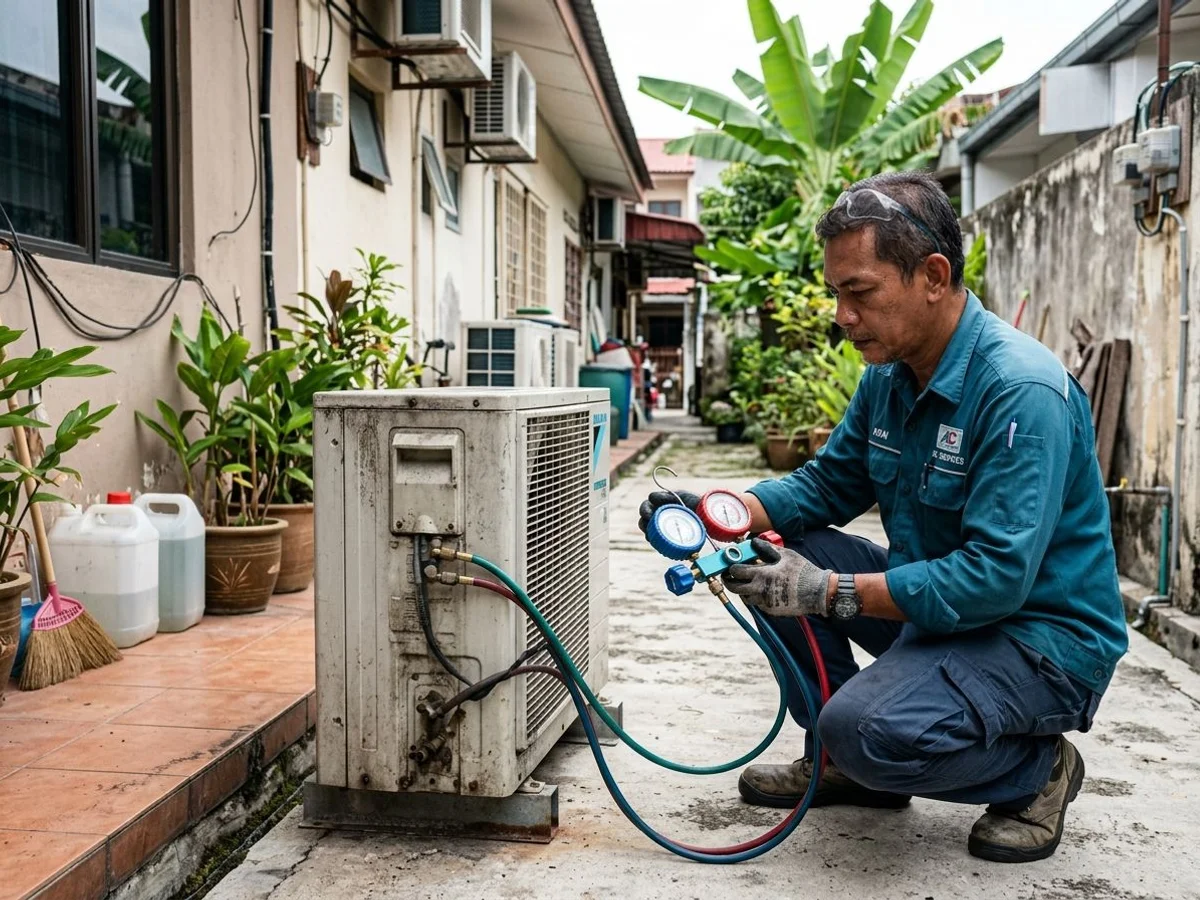
Common Outdoor Unit Failures
The severity and cost of outdoor unit repairs vary drastically based on which part has failed. We break down the three most common electrical and mechanical faults below.
- Capacitor failure: This small part acts like a battery to jump-start the compressor motor. Replacement costs range from RM150 to RM300 locally.
- Compressor failure: The heart of the aircon has seized or burnt out. Repair bills easily hit RM1,500 to RM3,000, making a total system replacement a smarter financial choice for older units.
- PCB failure: The electronic control board is short-circuited. Diagnostic testing confirms if the board can be repaired or needs full replacement.
A blown capacitor is actually the most common and easiest fix among these three. We stock a wide variety of capacitors in our service vans to ensure this repair happens on the first visit. The actual replacement part costs around RM15 to RM30 in Malaysia, but diagnosing high-voltage equipment requires professional safety training.
What to check before you call
Performing a quick self-check on your filter, remote settings, and circuit breaker can solve the problem instantly. We highly encourage taking two minutes to inspect these basics before reaching out to a technician. These simple steps save time and keep money in your pocket.
Our team created this quick checklist to help you rule out user errors.
- Inspect the filter: Pull the mesh filter out from the indoor unit. Wash it if it looks visibly dusty, run the system for an hour, and monitor the temperature.
- Verify remote settings: Ensure the mode is set to “Cool” rather than “Fan” or “Dry” mode. Lower the set temperature below the current room temperature.
- Check the breaker: Open your main consumer unit panel to see if the dedicated aircon switch has tripped.
- Listen to the outdoor unit: Check if the outdoor fan is spinning. Note any grinding noises or obvious physical damage.
A unit that fails these basic checks requires professional attention. We are ready to help you book a repair if the cooling still refuses to kick in.
WhatsApp a photo of both the indoor and outdoor units along with a description of what steps were already taken. We will reply with the next available slot and a rough idea of the expected repair path.
A note on quick-fix gas top-ups
Cheap gas top-ups are a financial trap if the technician does not find and seal the physical leak first. We constantly warn Penang residents about flyers advertising RM100 gas refills. The newly added refrigerant will simply escape into the atmosphere over the next few weeks.
Our industry standards require proper leak detection, pressure testing, and resealing before adding a single drop of new gas. Paying for endless cheap top-ups costs more money in the long run and severely damages the compressor.
We insist that doing real, permanent refrigerant work is the only service worth your money. Your air conditioning system deserves a proper fix that guarantees years of reliable cold air.
Final thoughts on your cooling issues
Dealing with an aircon not cooling is stressful, but the solution is often simpler than you think. We see hundreds of these cases every month, and regular maintenance prevents the vast majority of them.
The next time your room feels too warm, start by checking your filters and remote settings.
We are always ready to step in and restore your comfort when the basic troubleshooting steps fall short. Contact our team today to get your home back to the perfect temperature.