
6 DIY ways to clean your aircon at home
Six simple DIY aircon cleaning steps you can do at home in Penang — filter, coils, drain line, blower — plus the signs it's time to call a professional.
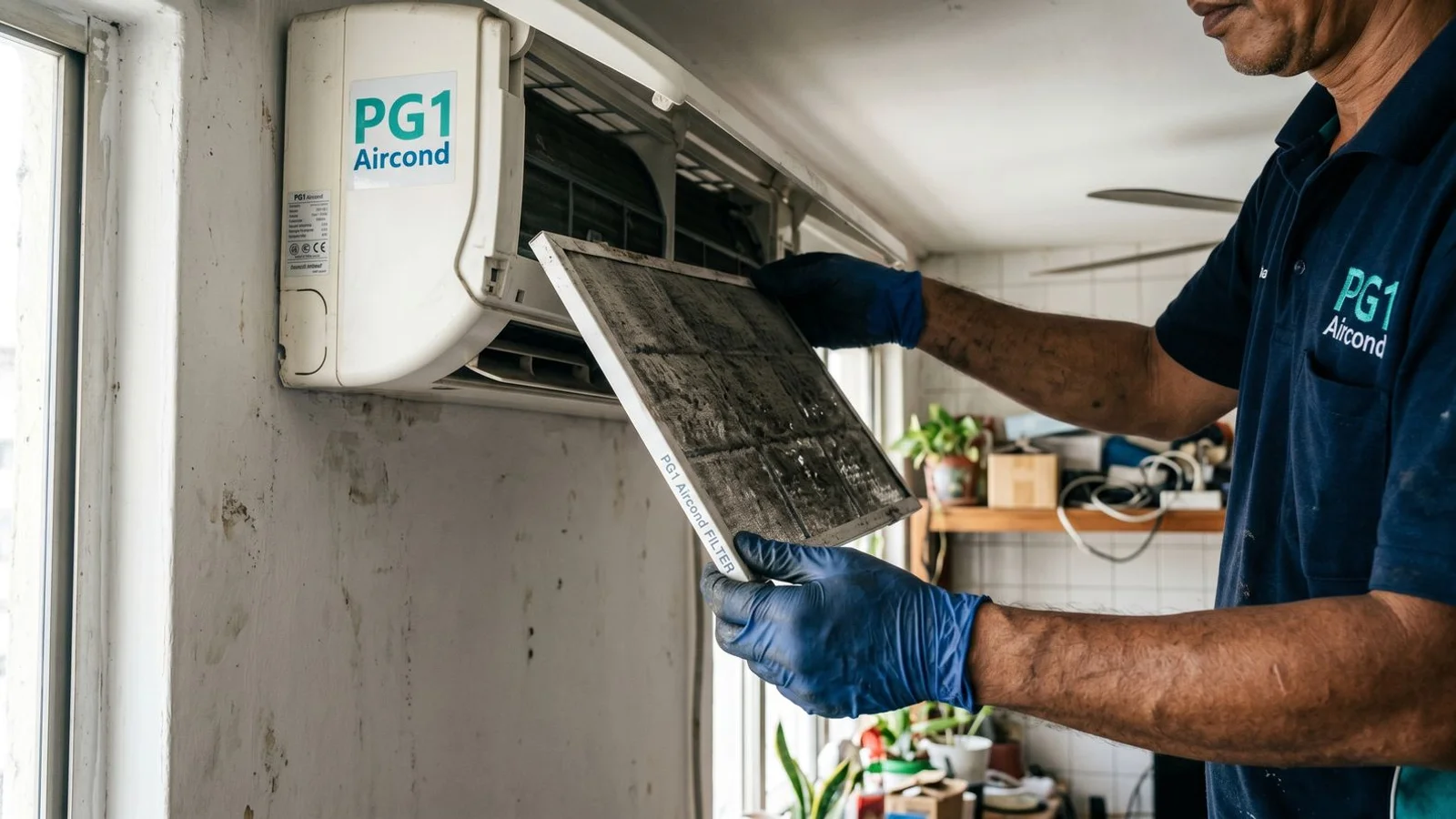
Penang’s weather is hot and humid all year round, which makes a working aircon less of a luxury and more of a daily necessity. The same conditions that make us run the unit non-stop also turn it into a breeding ground for dust, mould, and bacteria when it’s left uncleaned.
The good news is that a lot of basic upkeep is genuinely DIY. Keeping the easy-to-reach parts clean extends your unit’s lifespan, keeps the air in your home fresher, and cuts down how often you need to book a callout.
Here are six simple ways to clean your aircon at home — and, just as importantly, the point where you should stop and call a professional.
1. Clean or replace the filter
The filter is the single most important part you can maintain yourself. It traps dust before it reaches the coil, and when it clogs, the whole system has to work harder to push air through. A standard 1 HP unit can lose a noticeable chunk of its cooling efficiency on a dirty filter alone.
Pop the front cover open, slide the mesh filters out, and rinse them under the tap with a little mild detergent. Let them dry fully before sliding them back — fitting a damp filter just invites mould. If a filter is torn or permanently grey, replace it rather than clean it.
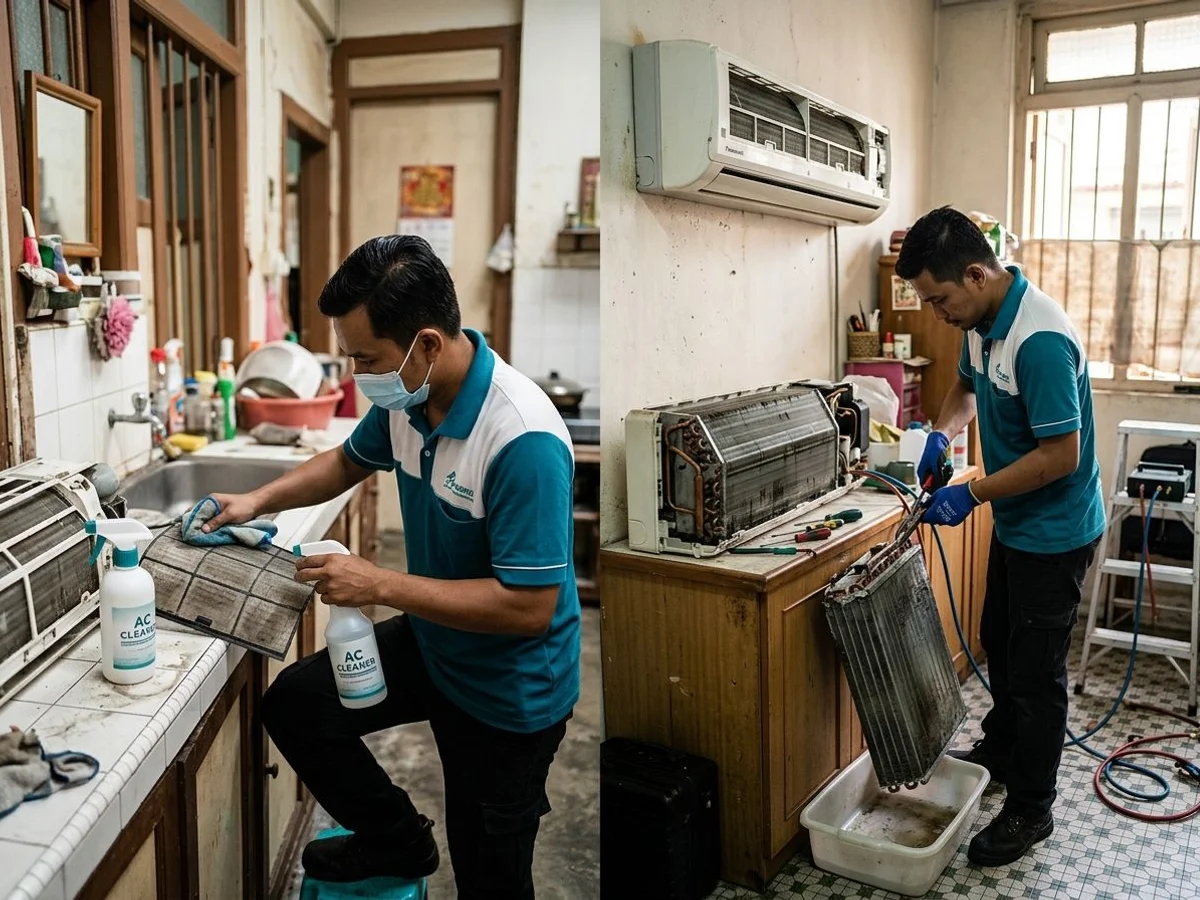
Do this every two to four weeks in Penang. It’s the highest-value two minutes of aircon maintenance there is.
2. Vacuum the coils
Behind the filter sits the evaporator coil — the finned surface that actually pulls heat out of your room. Dust that slips past the filter settles here and insulates the fins, so the unit cools more slowly.
With the aircon switched off at the wall, use a vacuum cleaner with a soft brush attachment to lift the loose dust off the visible fins. Work gently and in the direction of the fins. Those aluminium fins are thin and bend easily, and a bent fin blocks airflow just as badly as dust does.
This surface clean helps, but it isn’t a substitute for a proper wash. If cooling is still weak afterwards, the grime is deeper in the coil than a vacuum can reach.
3. Clear the drain line
The drain line carries condensation away from the indoor unit. In our humidity it produces a lot of water, and when the line clogs with algae or sludge, that water backs up and drips out of the indoor unit onto your wall or floor.
You can flush a mild mixture of bleach and water through the drain outlet, then rinse it with clean water to clear light blockages. Keep the area around the indoor unit dry while you work, and never pour anything near the electrical side of the unit.
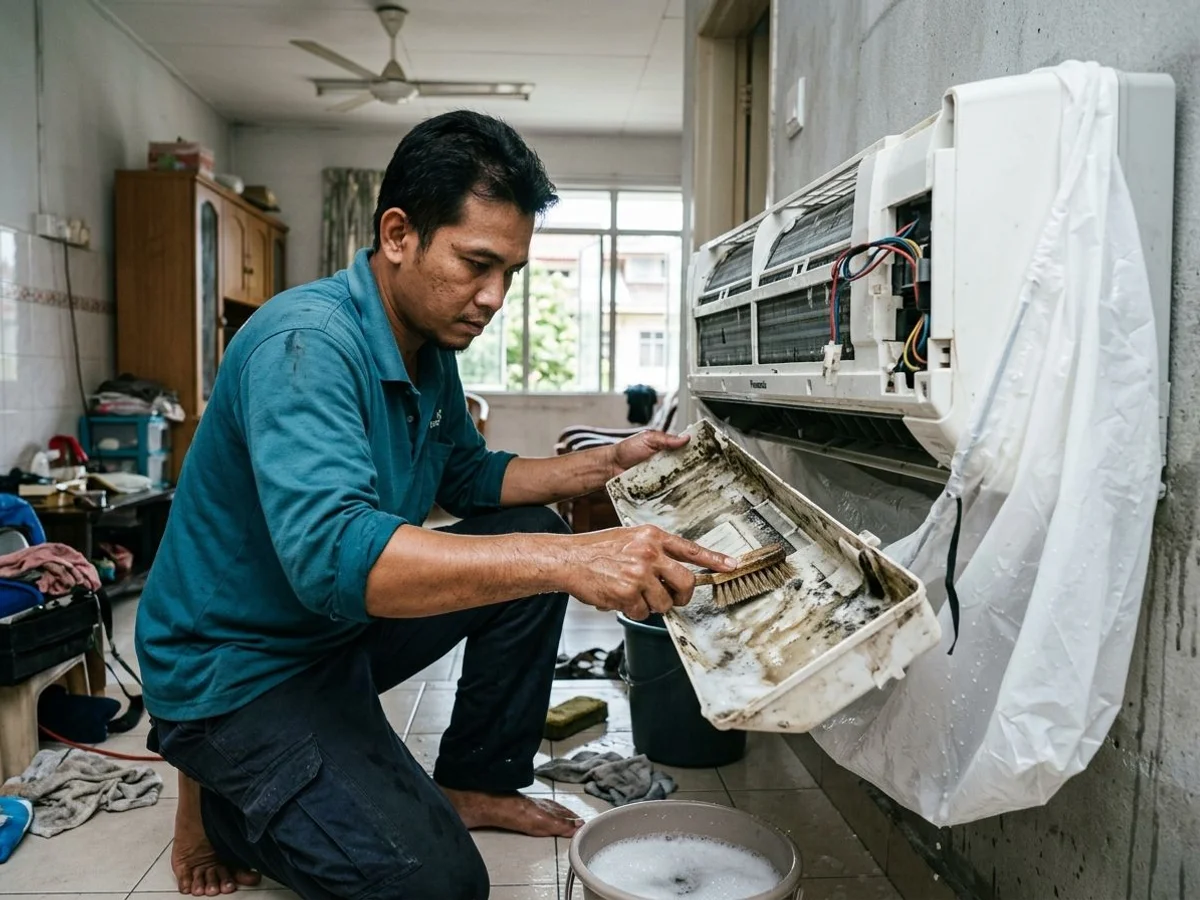
A persistent leak that comes back after flushing usually means the tray or line needs to be dismantled and cleaned properly.
4. Wipe down the casing and vanes
The outer casing and the swing vanes collect dust and the occasional fingerprint, and the vanes in particular are where mould first shows up as black speckling. Wipe them down with a damp cloth every few weeks. A clean casing won’t change how the unit cools, but mouldy vanes blow spores straight into the room, so it’s worth keeping on top of.
5. Give the blower a light clean
The blower wheel is the spinning barrel that pushes cooled air into the room. It’s one of the dirtiest parts of any aircon because damp dust cakes onto its blades over time, and a fouled blower is a common cause of weak airflow and a musty smell.
You can reach the visible edge of the blower with a soft brush to clear surface dust. Be honest about the limits here, though: properly cleaning a blower wheel means removing it, and that’s where DIY ends for most people. If the blades are visibly black or furry, note it down for your next professional service.
6. Book an annual professional service
The last “DIY” step is knowing what you can’t do yourself. Even a spotless filter doesn’t reach the deep grime, mould, and bacteria inside the coil and blower housing. Booking a proper service at least once a year keeps the inside of the unit clean and catches small faults before they become expensive ones.
For most Penang homes we recommend a deeper chemical wash every three to six months, because the heat and humidity foul a coil far faster here than in a temperate climate.
When to stop DIY and call a professional
DIY upkeep handles the surfaces. Some symptoms, though, point to a fault inside the unit that needs a technician’s tools and training. Stop and book a service if you notice any of these:
- Water leaking from the indoor unit that comes back after you’ve flushed the drain line. The tray or line likely needs dismantling.
- A grinding, rattling, or squealing noise. That usually means a loose part or a worn fan bearing — not something a clean will fix.
- The room won’t get cold even with a clean filter. Weak cooling often points to low refrigerant from a leak, which is never a DIY job.
- The unit won’t switch on at all. Check your breaker first, then call — this is an electrical fault.
If you hit any of these, it’s time for a professional aircon repair rather than another round of cleaning. It also helps to know the broader signs your aircon needs servicing so you can catch problems early.
The bottom line
Regular DIY cleaning — filter, coils, drain, casing, and blower — keeps your aircon running efficiently and your air fresh between services. It won’t replace a proper chemical wash, but it stretches the time between them and helps your unit last longer.
When the basics aren’t enough and the cooling, noise, or leaking won’t settle, WhatsApp us a photo of your unit. We’ll tell you honestly whether it needs a service or just a better clean.