
How to Lower Your Aircon Electricity Bill in Penang
Cut your aircon's TNB bill in Penang: how clogged coils raise consumption, smarter temperature habits, and when an inverter upgrade pays off.

We see TNB bills daily across Penang. Air conditioning almost always dominates the monthly expenses.
The current tiered residential tariffs mean heavy usage quickly pushes you into the expensive RM0.571 per kWh bracket.
Our team knows that a few strategic changes can drop that cooling cost by 20 to 40 percent. This is not about suffering in the heat.
It is about understanding how your system actually uses power.
We are going to break down the exact steps to lower your aircon electricity bill. The process starts with simple maintenance — which is also why we recommend a regular aircon service in Penang — and ends with smarter daily habits. For the full maintenance cadence, see how often you should service your aircon.
Every recommended adjustment protects your wallet.
Step 1: Get the coils clean
We always check the coils first when diagnosing high power consumption. Neglecting a chemical wash for over a year forces your compressor to work overtime against layers of dust and mold.
High humidity in Penang causes this grime to build up incredibly fast.
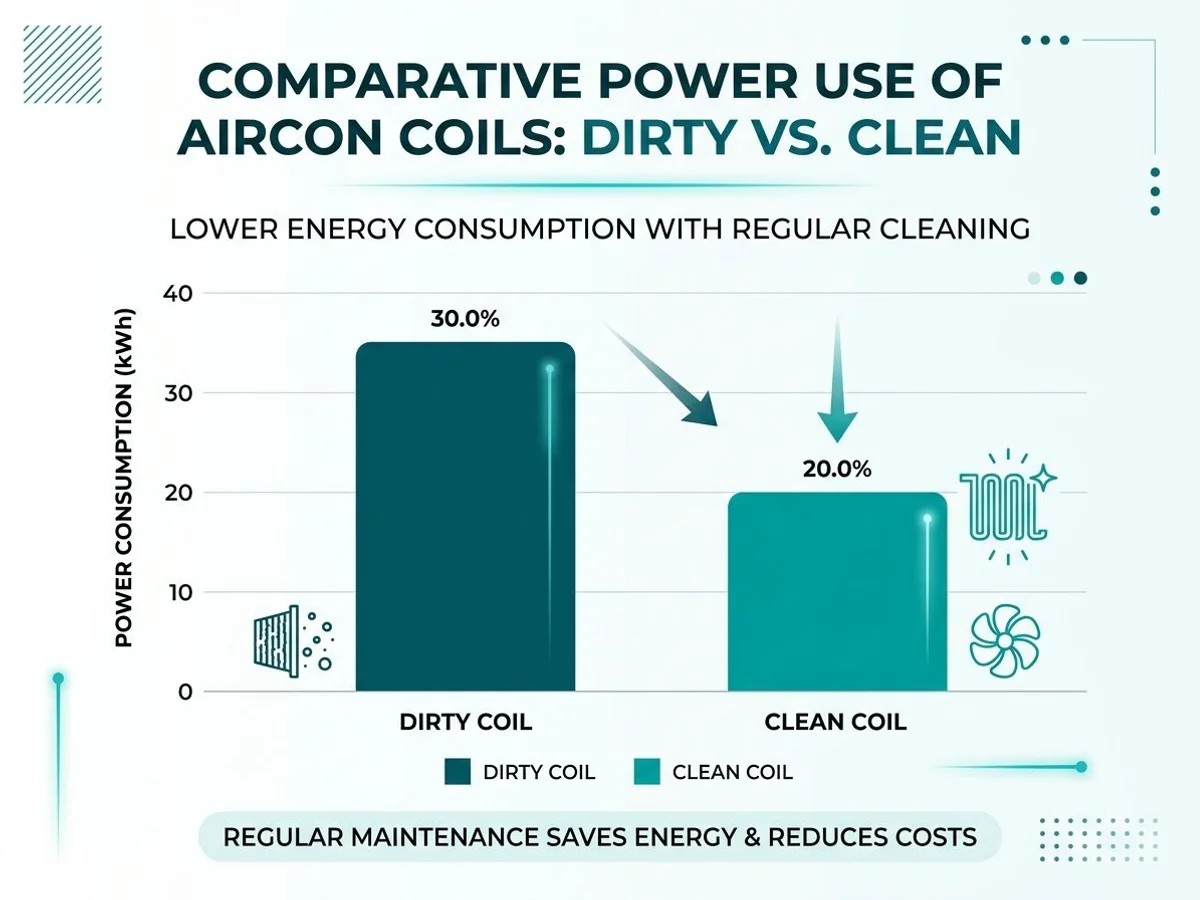
Our technicians regularly see dirty units consuming 15 to 25 percent more power than clean ones. A standard 1.5 HP unit running eight hours a night might cost you an extra RM30 to RM60 per month just fighting through that dirt.
The cleaning service typically pays for itself in three to six months.
We highly recommend scheduling this maintenance annually. Clean coils transfer heat efficiently and keep your system running in the lower TNB tariff blocks.
These common signs indicate your unit needs immediate attention:
- Airflow feels noticeably weaker than usual.
- The room takes much longer to reach the target temperature.
- Musty odors blow from the vents during startup.
- Your monthly TNB bill spikes unexpectedly.
Step 2: Fix the temperature habit
Our next target is the most common behavioral mistake in Penang homes. Setting the thermostat to 18°C right away does not cool the room faster. The compressor simply runs longer at maximum capacity.
”We follow the Suruhanjaya Tenaga guidelines, which officially recommend a setpoint of 24°C for optimal energy efficiency. Every single degree you drop the temperature increases your energy consumption by roughly 7 percent.”
Dropping the thermostat from 25°C down to 18°C forces the system to use 40 to 55 percent more power for very little noticeable comfort. Our ideal setup for a local bedroom combines a 25°C setting with a ceiling fan. The circulating air creates a wind-chill effect that makes the room feel as cold as 22°C.
Running the unit steadily at this temperature uses significantly less energy than turning it on and off constantly.
We created this simple comparison to show the impact on your aircon TNB bill. The numbers speak for themselves. Small adjustments yield massive results.
| Target Temperature | Compressor Workload | Energy Impact |
|---|---|---|
| 18°C | Maximum continuous run | Highest TNB cost |
| 22°C | Frequent cycling | Moderate increase |
| 24°C to 25°C | Steady maintenance | Optimal savings |
Step 3: Reduce the heat load
We always remind clients that an air conditioner’s sole job is removing heat from an enclosed space. Less heat inside means the compressor finishes its job faster and shuts off sooner. Sunlight pouring through west-facing windows during a Penang afternoon adds massive thermal load.
Our first recommendation is installing blackout curtains to block that radiant heat. You should also check the bottom of your bedroom doors for drafts. Cheap weatherstripping seals prevent your expensive cold air from escaping into the hallway.
We also suggest managing internal heat sources aggressively.
- Leaving computers, large televisions, and old incandescent bulbs running creates a microclimate the system has to fight.
- Shutting the doors to unused bathrooms or closets prevents the system from cooling empty spaces.
We use this general rule of thumb for heat management. The logic is simple. You stop the heat before it enters.
Step 4: Check your habits
Our technicians frequently spot money-wasting habits during routine service calls. People often blast the cooling all night while sleeping under heavy winter blankets. A simple swap to a lighter cover allows you to raise the thermostat and save money immediately.
We heavily utilize built-in timer functions to avoid cooling empty rooms. Leaving the unit running while you go out for dinner wastes huge amounts of electricity. Setting a timer ensures the room stays comfortable only when you are actually inside it.
Our team wants to address a major myth regarding Dry mode.
- Many users think Dry mode reduces power use, but in Malaysia’s 80 percent humidity, it actually forces the compressor to run constantly to extract moisture.
- Using standard Cool mode with the Eco or Sleep function selected proves much more efficient for daily use.
We compiled a quick list of bad habits to break today. These actions happen daily without thought. Breaking them stops the financial leak immediately.
- Running Dry mode to save power in high humidity.
- Cooling a room for an hour before entering.
- Using maximum fan speed instead of Auto.
Step 5: Consider an inverter
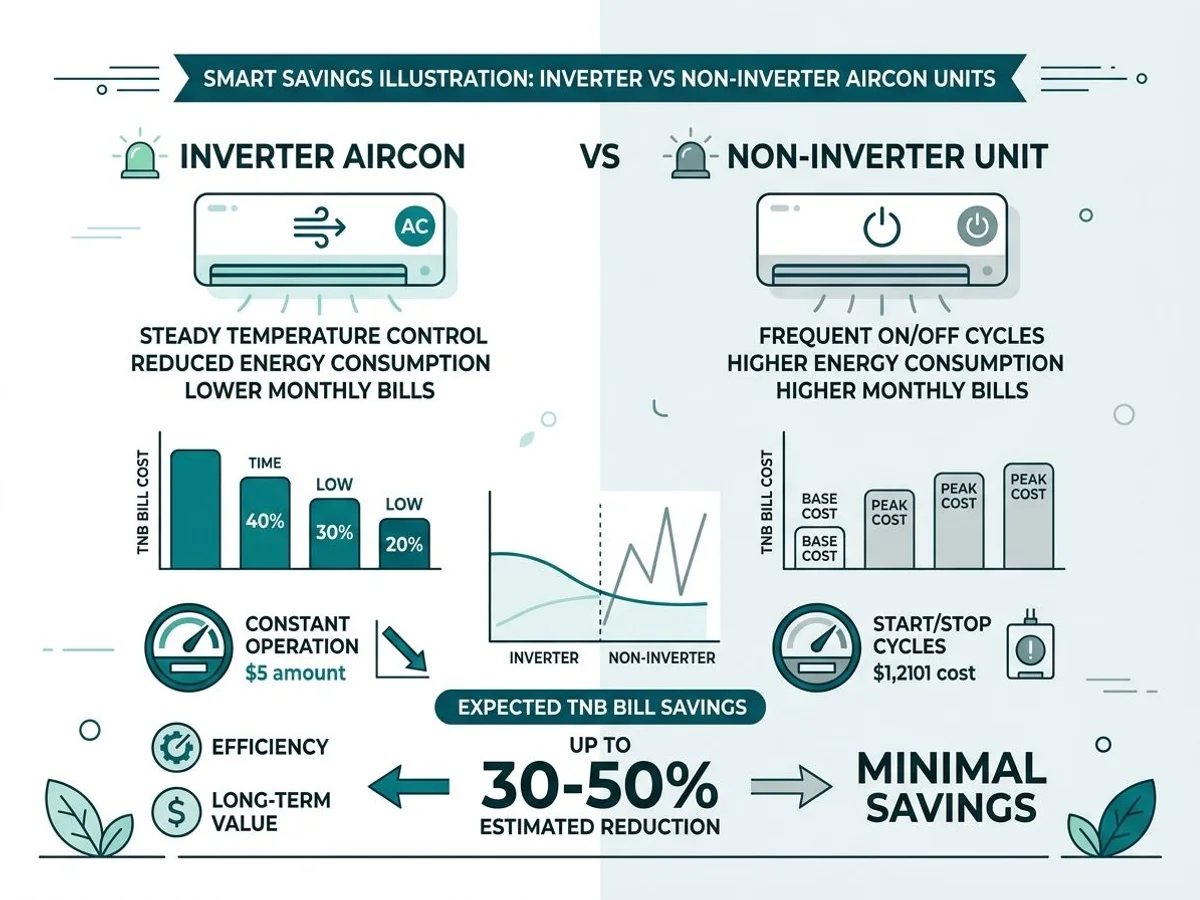
We frequently help customers calculate the long-term return on upgrading their equipment. A non-inverter unit older than eight years represents a massive drain on your electricity budget. Traditional compressors run at maximum capacity until the room cools, shut off entirely, and then surge back on when temperatures rise.
Our 2026 data shows that replacing these old models with a 5-star Suruhanjaya Tenaga rated inverter completely changes the math. Modern inverters modulate their power draw, slowing down gracefully once the target temperature is reached. This steady operation uses a fraction of the electricity required for constant start-and-stop cycles.
”We see running costs drop by 30 to 50 percent for a daily-use bedroom when upgrading to an inverter. Combining this new hardware with an annual chemical wash cuts the cooling portion of your TNB bill in half.”
Reducing aircon power use becomes effortless with the right technology.
We only recommend non-inverters for guest rooms used a few times a year. You can discuss the exact sizing requirements during a professional installation site visit. A proper assessment ensures maximum efficiency.
What this looks like in practice
Our energy assessments reveal very consistent patterns across typical Penang households. Most homes operate two 1.5 HP non-inverter wall units for about eight hours every night. These neglected systems often push the monthly AC electricity cost to roughly RM280 to RM350.
We track the immediate financial impact of these simple interventions. Applying a chemical wash and raising the thermostat to 25°C drops that figure to RM200 to RM250. Upgrading just one of those main bedroom units to a 5-star inverter reduces the cost further to RM140 to RM180.
Our clients typically see over RM100 in monthly savings reflect on their very next billing cycle. The return on investment is undeniable. Taking action protects you against future TNB tariff increases.
We summarize the average household savings progression below. The figures represent actual homeowner results. Your specific savings will depend on local tariffs.
| Current Setup | Monthly TNB Cost Estimate |
|---|---|
| Neglected Non-Inverter (18°C) | RM280 to RM350 |
| Cleaned Unit (25°C + Fan) | RM200 to RM250 |
| Upgraded to 5-Star Inverter | RM140 to RM180 |
What about the meter sense?
We often field questions about whether Eco modes and inverter technology are just clever marketing gimmicks. Connecting a power meter proves that inverter compressors genuinely draw lower average wattage during steady-state cooling.
An Eco mode actively limits the maximum amperage the system can pull from your electrical panel.
Our advice is to tackle the cheapest interventions first before buying new equipment. Getting the coils cleaned and fixing your daily habits provides immediate relief.
Once you establish a baseline of efficient operation, calculating the payback period for a new inverter becomes a straightforward math problem.
We are ready to help you implement these steps to lower your aircon electricity bill today. Start with a thorough cleaning and see the difference immediately.
Lowering your cooling expenses takes consistent, smart choices.