
Why Is My Aircon Making Noise or Vibrating?
Rattling, buzzing, or vibrating aircon? Causes include loose mounts, worn fan bearings, and compressor issues — which are urgent and which can wait.
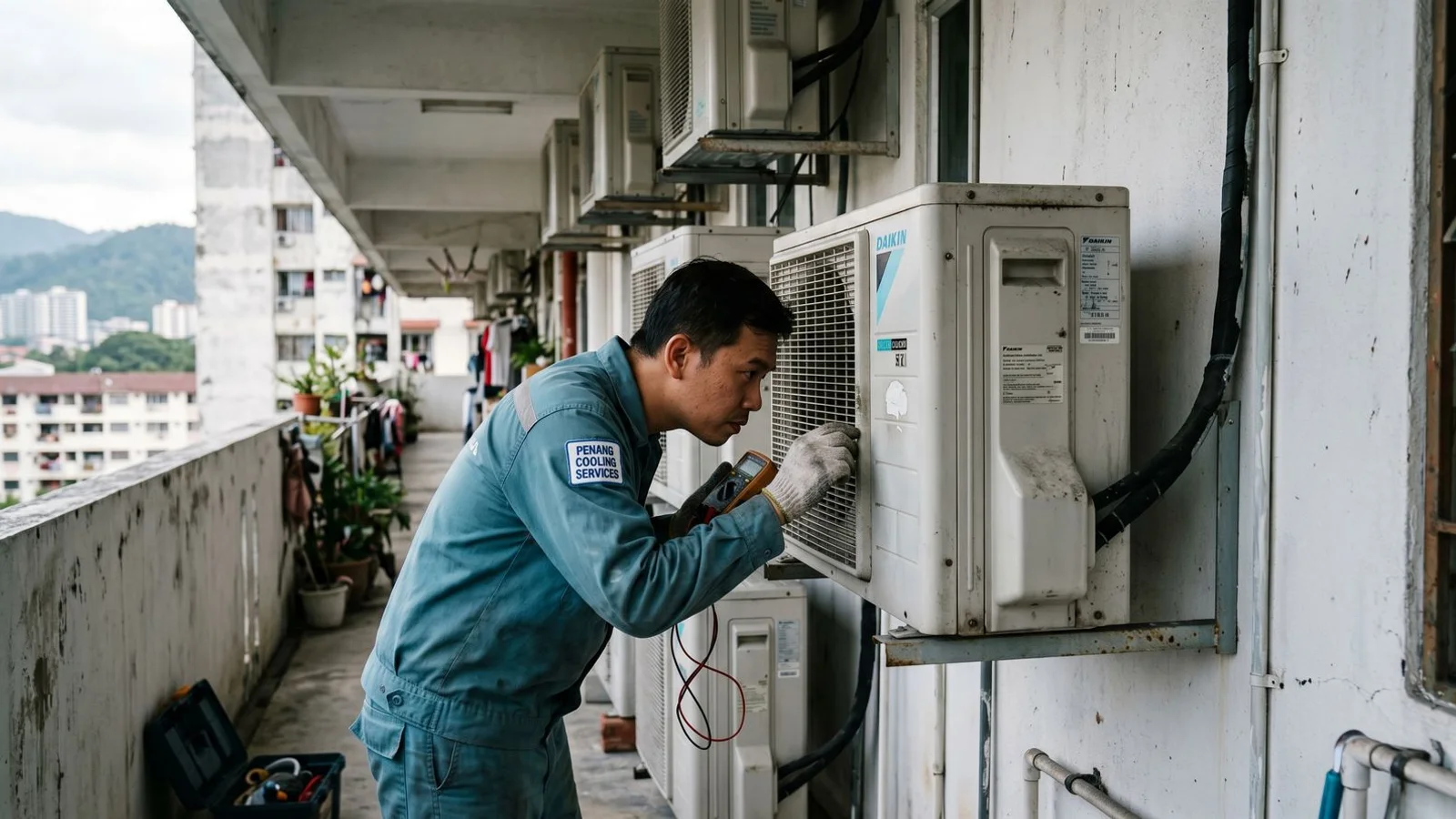
We know that subtle hum is just part of living with an air conditioner. You expect some background noise, but sudden rattles, buzzing, or violent shaking are entirely different issues.
Our technicians have spent over 15 years servicing homes across Penang, and these sounds are usually the first warning sign of a failing component.
Let’s look at the five most common reasons behind an aircon making noise, what they actually mean for your unit, and when to call for help. If a callout is needed, here’s what to expect from an aircon repair.
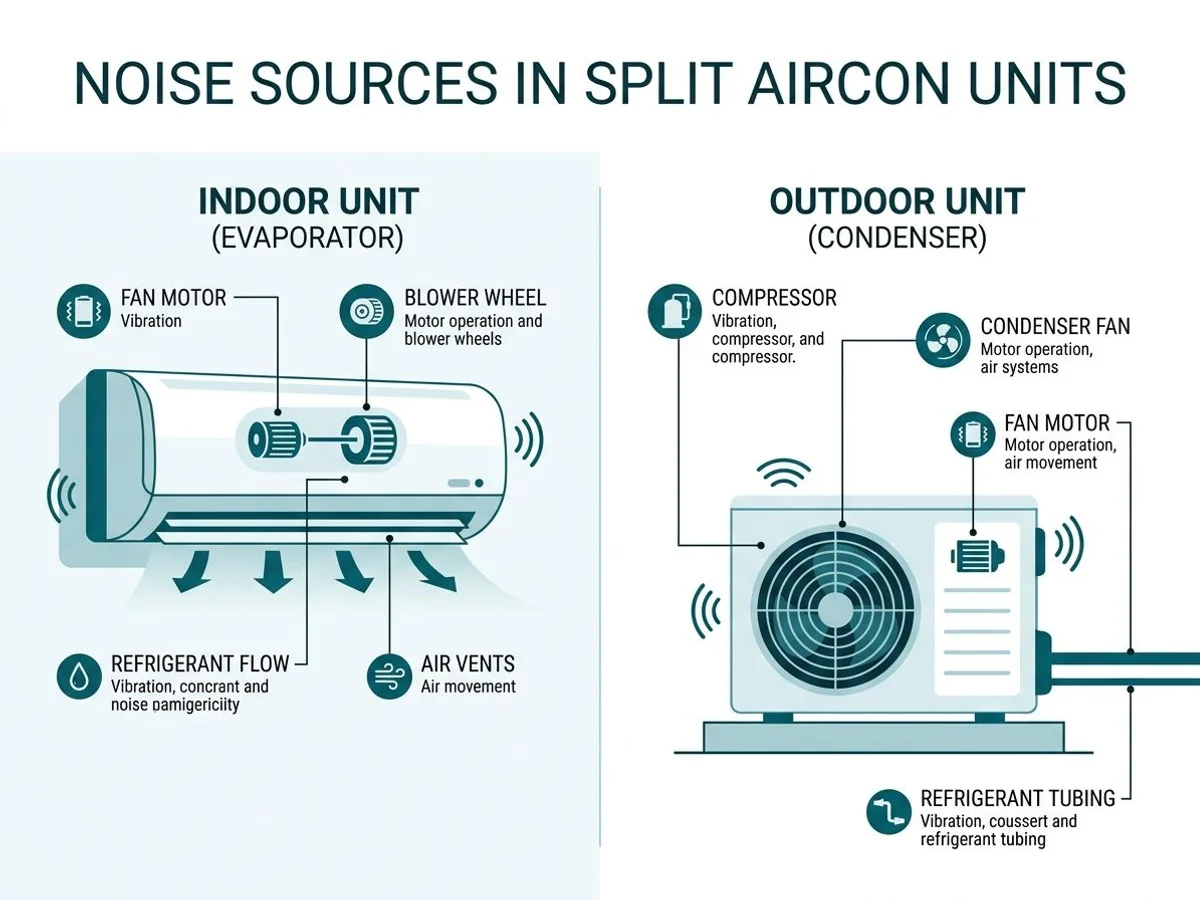
The five noises and what each means
Rattling (most common, usually minor)
Our teams find this is the most frequent noise complaint from local homeowners. It typically sounds like a small, hard object moving around inside the metal casing.
We often see rapid rust formation on chassis screws because Penang’s coastal environment is highly corrosive. Salty air degrades zinc plating very quickly.
Here are the usual suspects behind that rattling sound:
- Rusted or loose mounting screws: Corroded fasteners cannot hold the outdoor unit’s casing tightly.
- Trapped debris: Leaves, small twigs, or stray insects get caught inside the outdoor fan cage.
- Unsecured access panels: The indoor unit cover might not be clipped in properly.
- Failing vibration pads: Rubber feet under the outdoor condenser wear out over time.
We classify this as a low-urgency issue. Annoying sounds like this are rarely damaging, so you can wait to fix them during your next regular service.
Buzzing (varies, sometimes urgent)
We always advise customers to pay close attention to electrical sounds. A low, steady hum is normal, but a loud buzz means a component is struggling.
Our specialists find that a failing dual-run capacitor is the most common culprit. Intense Malaysian heat spikes put immense strain on these energy-storing parts.
Watch out for these specific buzzing triggers:
- Dying run capacitor: The outdoor unit struggles to start the fan or compressor.
- Vibrating electrical parts: A loose contactor or relay switch creates a loud electrical arc sound.
- Refrigerant flow issues: A blockage can create a high-pitched whistling or buzzing noise.
- Normal operation: A very faint, unchanging compressor hum is perfectly safe.
We strongly recommend treating sudden electrical buzzing as a potential fire risk. Switch off the power at the main breaker immediately if the noise is continuous and louder than normal.
Grinding (urgent)
We consider grinding to be an emergency situation. This harsh, metal-on-metal noise usually means internal lubrication has completely failed.
Our teams know that replacing a worn fan motor bearing early is highly cost-effective. Letting the bearing grind until the motor burns out will multiply your repair bill significantly.
Common reasons for grinding noises include:
- Failed fan motor bearings: The indoor or outdoor fan has lost its internal lubrication.
- Stressed compressor: The system is running with dangerously low oil or refrigerant levels.
We urge you to turn the unit off immediately to prevent further damage. Calling a professional within a day or two can save you from an expensive full motor replacement.
Squealing (moderate)
Our technicians often hear this high-pitched whine right when the air conditioner starts up. Older units with fan belts will squeal when the belt slips, much like an old car engine.
We rarely see slipping belts today because most modern residential units use direct-drive motors. A squeal in a newer unit usually points directly to a dry motor bearing.
The main causes of squealing are:
- Slipping belts: This applies mostly to aging commercial or older residential units.
- Dry bearings: This is the early warning stage before a bearing starts grinding completely.
- High internal pressure: A buildup of pressure inside the compressor causes a short squeal on startup.
We rate this as a moderate urgency issue. Book a service appointment within a week or two before the squeal turns into a costly grind.
Vibrating (moderate to high)
We often see outdoor condensers shaking violently enough to rattle the windows. This severe vibration stresses the copper piping and can eventually cause expensive refrigerant gas leaks.
Our repairs frequently involve replacing degraded rubber vibration pads under the unit. Constant exposure to Malaysia’s intense tropical sun breaks down these rubber mounts within three to five years.
Look out for these vibration sources:
- Degraded compressor mounts: The internal rubber bushings isolating the heavy compressor have rotted away.
- Brittle vibration pads: The exterior rubber feet under the metal casing have hardened completely.
- Unbalanced fan blades: Dirt buildup or physical damage has thrown the outdoor fan out of balance.
- Loose wall brackets: The metal arms holding the unit to your exterior wall are losing their grip.
We never recommend ignoring an aircon vibrating heavily. Sustained shaking loosens critical connections, so you need to arrange a repair fast.
What we check on arrival
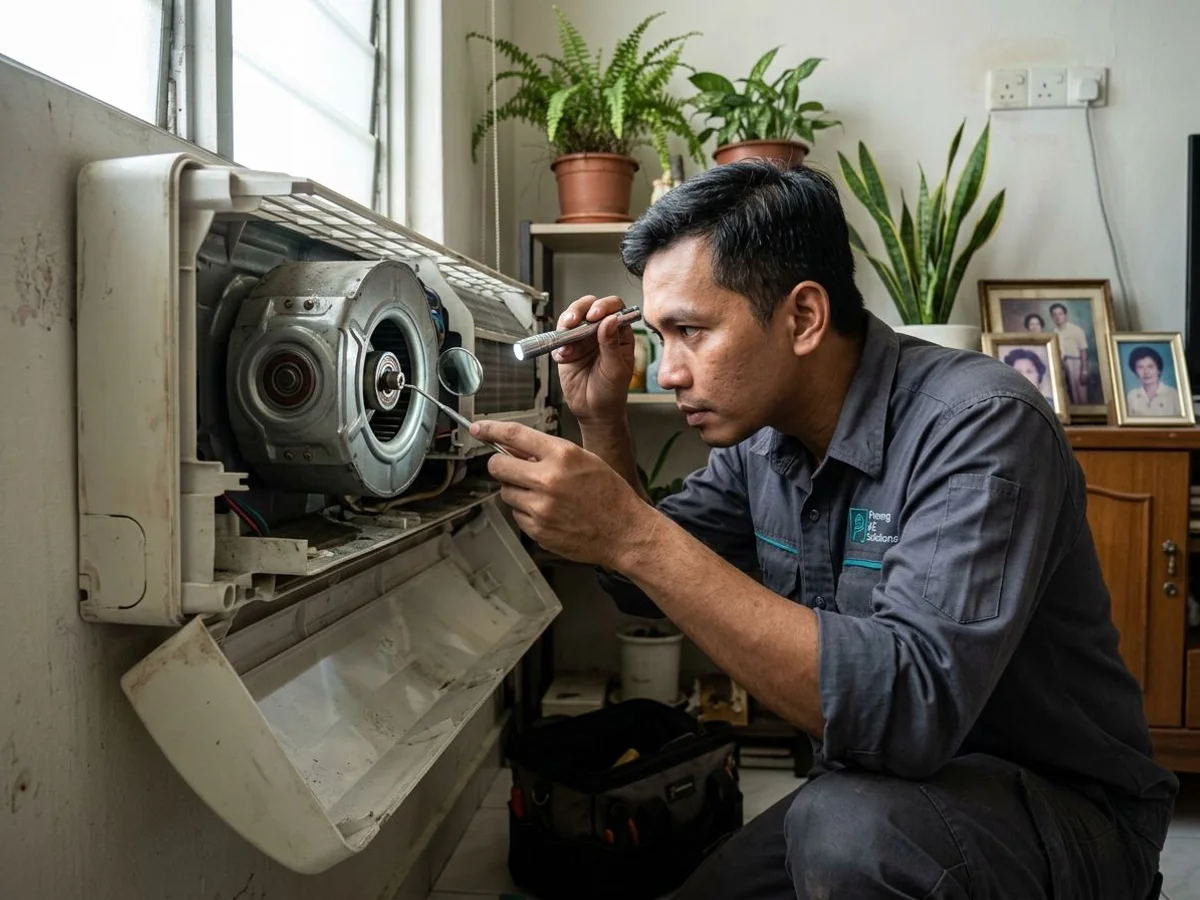
Our diagnostic process is designed to find the root cause quickly and accurately. A systematic approach prevents unnecessary parts replacement and saves you money.
We follow a strict inspection checklist for every noise complaint. Here is exactly what happens during your service visit:
- Listen to the running unit: Technicians confirm the exact noise profile you described.
- Inspect the exterior: The team checks the outdoor unit for debris, rusted screws, and brittle pads.
- Test the fan manually: Blades are spun by hand to feel for resistance or rough bearings.
- Secure the hardware: Technicians check all wall mounting brackets for dangerous play.
- Run multimeter tests: Digital tools measure the electrical output of the capacitor and contactor.
- Check system pressure: A gauge reading confirms if there are any refrigerant flow restrictions.
- Provide a clear quote: You receive a firm price before any actual repair work begins.
We prioritize total transparency regarding parts and labor pricing. This straightforward approach has helped us compile typical repair ranges for common noise issues.
| Repair Type | Typical Cause | Estimated Cost (RM) |
|---|---|---|
| Simple Fastening | Rattles, loose screws, debris | RM50 - RM80 |
| Capacitor Replacement | Buzzing, failure to start | RM150 - RM300 |
| Bearing Replacement | Early stage squealing | RM150 - RM250 |
| Fan Motor Replacement | Severe grinding | RM250 - RM500+ |
| Compressor Faults | Internal knocking or buzzing | Quoted individually |
What to do before we arrive
We rely on your initial observations to speed up the diagnostic process. The details you provide when booking help the technician bring the right parts to your location.
Our team also accounts for local voltage fluctuations from the TNB grid. Temporary electrical buzzing often happens right after a heavy thunderstorm or power trip.
We suggest taking a few simple steps before the technician arrives. Please note these details:
- Record the timing: Note if the noise happens at startup, during cooling, or only when the outdoor fan spins.
- Locate the source: Determine clearly if the sound is coming from the indoor blower or the outdoor condenser.
- Cut the power: Switch off the main breaker immediately if you hear loud buzzing or grinding.
- Capture media: Take a short smartphone video where the abnormal noise is clearly audible.
We can often diagnose simple problems remotely if you provide a clear video. This visual evidence ensures the repair crew arrives fully prepared for the job.
Don’t ignore it
Our experience proves that the cheapest aircon repair is always the one you do early. Small problems never fix themselves, and ignoring a weird noise will only lead to bigger bills.
We know that a simple loose screw fixed in five minutes today prevents a cracked metal mount next season. A worn bearing replaced now costs around RM200, but letting it destroy the entire motor will cost you RM800 or more very soon.
Our technicians recommend acting quickly when a noise is new or getting worse.
You can Book a repair through the website the moment you notice an unusual sound.
We are ready to restore the peace and quiet in your home. Just WhatsApp the team a brief description and a short video, and a specialist will lock in the next available service slot for your noisy aircon in Penang.